
Advanced Washing Fastness Tester

Washing Fastness Tester
- Model No.: SW-12G
- Origin: China Manufacturer
- Minimum Order Qty: 1 Unit
- Payment: T/T, L/C
- Lead Time: 20 Working Days
- Delivery: Direct to Door
What is A Washing Fastness Tester
A Washing Fastness Tester, or A Launder Ometer, is used for testing the wash fastness (colorfastness to washing), dry cleaning resistance of color fastness, and colorfastness to shrinking of various textiles, as well as for assessing the wash fastness performance of dyes.
Washing Fastness Tester Featured Products
DaRong Developed several models of Washing Fastness Testers, each with its specific features. You can always find a good fit for your laboratory to test the washing fastness properties to washing and dry cleaning.

- 7-inch multifunctional color touchscreen.
- Automatic water level control, including automatic water inlet and drainage, with a dry-burning prevention function.
- Constructed with high-grade stainless steel with a brushed finish for durability and aesthetics.
- Equipped with a door touch safety switch to effectively prevent scalding and pinching injuries.
- Utilizes a world-top brand industrial microcontroller for temperature and time control, with a “Proportional-Integral (PID)” adjustment function to prevent temperature overshoot and ensure time control accuracy of ≤±1 second.
- Employs solid-state relays for heating tube control, ensuring stable temperatures, noise-free operation, and extended lifespan.
- Built-in standard programs for automatic operation, support program editing, storage, and manual operations to accommodate different method standards.
- The testing cups are made from world-top brand 316L material, offering high temperature, acid, alkali, and corrosion resistance.
DaRong has developed the DR-24GH Environmental Friendly Washing Fastness Tester based on the SW series. It not only possesses all the functionalities of the SW series but also features in the innovative adoption of an anhydrous heating constant temperature design, which does not cause secondary environmental pollution.
- Test cup capacity: 550ml (φ75mm×120mm) (GB, ISO, JIS and other standards) 1200ml (φ90mm×200mm) [AATCC standard (selected)]
- Distance from the center of the rotating frame to the bottom of the test cup: 45mm
- Rotation speed :(40±2)r/min
- Time control range: 9999MIN59s
- Time control error: < ±5s
- Temperature control range: room temperature ~ 99.9℃
- Temperature control error: ≤±1℃
- Heating method: electric heating

Why Choose DaRong's Textile Tester?
As a leading company in China’s textile testing instrument industry, DaRong has dedicated over 30 years not only to developing new products but also to embracing global environmental sustainability as a long-term corporate responsibility. Sustainable development and environmental protection have been integral to many of our product developments, with the DR-24GH Environmental Friendly Washing Fastness Tester being one such achievement. DaRong will continue to intensify its R&D efforts in sustainability and environmental protection. Choosing DaRong means taking on the significant responsibility of protecting the global environment.

1V1 Support
Online English Speaking Technical Assistance for Trouble Shootings
Free Training
Free Online Training, Free Accomodation, Free foods, Free On-Site Training
On-Site Maintainence
Engineers Worldwide Periodically Visits for On-Site Instrument Maintenance
Free Software Update
Free Over-the-Air Software Update to Meet the Most Updated Standards
Craftsmanship
Precision
Stability
Supply Chain Advantage
High Cost-Performance Ratio
Exceptional Performance
Washing Fastness Test by Applications


Washing Fastness Tester by Standards
AATCC 61 /1A/2A/3A/4A/5A
ISO 105 C01/02/03/04/05/06/08
GB/T5711
GB/T3921/1/2/3/4/5
JIS L0860/0844
BS1006
DIN、NF、CIN/CGSB、AS
Washing Fastness Tester by Chambers
1 Chamber

2 Chamber
DaRong Washing Fastness Tester Models


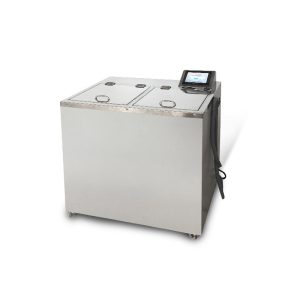


Accuracy, Reliability & Design Excellence of Darong Advanced Washing Fastness Tester
Darong advanced washing fastness tester always delivers the precise test results with PID temperature control, 316L stainless steel cups, and intelligent automation. These testers are specifically designed for ISO 105, AATCC 61, and JIS testing standards and ensure reliable, repeatable testing results for labs, manufacturers, and global quality control applications worldwide with confidence.
What is the Washing Fastness Test, and Why is it Important for Different Types of Fabrics?
The colorfastness to washing test is a standardized method used to evaluate the resistance of textile materials to color fading and staining during washing. It measures how well a fabric retains its original color when it is exposed to water, detergents, temperature, and mechanical agitation. This test is very important for determining the durability and performance of dyed or printed textile materials under real-life laundering conditions.
Different types of fabric behave differently during washing due to their fiber composition, dye-absorption properties, and treatments during finishing. Natural fibers such as cotton and wool tend to absorb dyes more deeply but may also release excess dye if not properly fixed. Synthetic fibers like polyester exhibit better color retention but can still be affected by high temperatures or chemical exposure.
The importance of washing fastness testing extends to product quality, customer satisfaction, and regulatory compliance, and poor colorfastness can result in fading, staining of other garments, and overall product failure. This is particularly important for garments such as sportswear, denim, and uniforms, which are often washed frequently.
All international testing standards, such as ISO 105 and AATCC 61, require accurate testing to ensure consistency and reliability; that is why washing fastness testing plays an important role in textile manufacturing and helps brands maintain quality and meet global market expectations.
What is the Washing Fastness Tester
A washing fastness tester, also called a launder-o-meter, is a lab instrument designed to simulate washing conditions and evaluate textile colorfastness. It uses stainless steel test cups that hold testing specimens, detergent solution, and, sometimes, steel balls to create mechanical agitation.
The instrument precisely controls temperature, time, and rotation speed to replicate the standard washing method. This allows accurately measurement of color fading and staining on the adjacent fabric or attached multifiber. Modern testers are equipped with PID control systems, automated programs, and safety features to ensure consistent, repeatable results. These instruments are essential for the textile testing labs performing standardized washing fastness tests globally.
Which Type of Fabric Should Be Tested in the Washing Fastness Test
This test is required for a wide range of textile materials to ensure the durability of color and the material’s performance. Common fabrics such as cotton, polyester, wool, silk, and linen exhibit different dye-absorption characteristics and require testing. Denim has a high dye concentration, which makes it prone to bleeding. In short, this test should be performed on each and every dyed or printed textile material, including knits, woven, and nonwoven, to ensure the performance stability and reliability under repeated washing or exposure conditions.
Overview of Darong Washing Fastness Tester
Darong washing fastness testers are especially engineered to deliver the highest accuracy, durability, and compliance with national and international testing standards. These instruments incorporate advanced PID temperature control systems that maintain temperature stability within ±1°C, ensuring reliable, repeatable test conditions. The use of 316L stainless steel test cups provides excellent corrosion resistance, including against acids and bases, making the tester suitable for long-term lab use.
Darong testers are equipped with a programmable control system that allows the user to select or customize test methods based on ISO, AATCC, and JIS standards. The safety features, such as automatic water level control, anti-dry heating protection, and door safety switches, enhance the operational safety.
Comparison of Darong Washing Fastness Testers
Feature | SW-12G | SW-12J | SW-12AC | SW-24AC | SW-24G | DR-24GH |
Control System | PID | PID | Advanced | Advanced | PID | Intelligent |
Heating | Water Bath | Water Bath | Water Bath | Water Bath | Water Bath | Anhydrous |
Cup Material | 316L | 316L | 316L | 316L | 316L | 316L |
Capacity | Medium | Medium | High | High | High | High |
Safety | Yes | Yes | Yes | Yes | Yes | Advanced |
Standards | ISO/AATCC | ISO/AATCC | ISO/AATCC | ISO/AATCC | ISO/AATCC | ISO/AATCC |
All of the above features make the Darong tester a reliable alternative to the global high-end brands.
Scientific Explanation of the Washing Fastness Tester
All washing fastness testers operate on the principles of heat transfer, chemical interactions, and mechanical agitation. During testing, the specimen is placed in a detergent solution and subjected to controlled temperature conditions, typically 40°C to 95°C. The temperature increases the rate of movement of the dye molecules within the fiber’s structure.
Mechanical action is generated by the rotation of the test cups and the inclusion of steel balls, which simulate the friction experienced during real washing. This agitation causes the loosely bound dye particles to detach from the surface of the testing specimen.
The chemical action from detergents and the alkaline solution further influences the stability of the dye molecule by breaking the weak molecular bonds between the dye and the fiber. The combined effect of all the above factors determines the degree of color fading and staining.
The results of these tests are evaluated using gray-scale ratings for both staining and color change. The scientific approach ensures an accurate assessment of textile durability under standardized washing conditions.
Testing That Can Be Performed on Darong Testers
The Darong washing fastness tester supports a wide range of international and national testing standards, enabling accurate simulation of domestic and industrial washing conditions. These tests are used to evaluate the colorfastness, staining, and durability of the textile materials under controlled parameters.
AATCC 61 Accelerated Washing Tests
Method | Temperature | Steel Balls | Simulation |
1A | 40°C | Yes | 1 wash cycle |
2A | 49°C | Yes | 5 wash cycles |
3A | 60°C | Yes | 10 wash cycles |
4A | 71°C | Yes | Heavy washing |
ISO 105-C Washing Fastness Tests
Standard | Temperature | Condition |
C01 | 40°C | Mild washing |
C02 | 50°C | Normal washing |
C03 | 60°C | Severe washing |
C04 | 95°C | Boiling wash |
C05 | 50°C | Bleaching |
C06 | Variable | Accelerated washing |
These testing methods differ in temperature, chemical composition, and mechanical action, which allows the labs to simulate the various washing environments. AATCC testing methods usually focus on accelerated testing using steel balls, while the ISO testing methods emphasize controlled chemical and thermal conditions.
Darong testers ensure precise control of all required parameters, enabling accurate, repeatable test results. This flexibility allows users to test a wide range of textile products according to the requirements of international markets.
How to Choose the Right Washing Fastness Tester
Selecting the most suitable washing fastness testers depends on the testing labs’ requirements, such as testing volume and applicable standards. Labs handling the high sample volumes should opt for multi-cup systems such as SW-24AC or SW-24G. For environmentally conscious operations, the DR-24GH with anhydrous heating provides energy-efficient performance.
Key factors to consider a tester include temperature control accuracy, material durability, safety features and programmability. A tester with an advanced control system ensures reliable results and reduces operator error. Choosing a model that supports multiple international testing standards allows greater flexibility and long-term usability, making it a valuable investment for textile testing labs.
Which Industries Required Washing Fastness Test
Washing fastness testing is important across multiple industries to ensure product quality and durability. The apparel industry relies on it for garments such as shirts, denim, and sportswear, which are frequently washed. Home textile manufacturers also test their products, such as bed sheets, towels, and upholstery fabrics.
The automotive and technical textile industries require a colorfastness-to-washing test to maintain performance under harsh conditions. The medical and hygiene sector uses washing fastness testing to ensure the safety and reliability of the nonwoven materials. Additionally, all textile exporters must comply with international standards, which makes washing fastness testing a critical requirement for global trade and quality assurance.
Why Choose Darong Washing Fastness Tester
All Darong washing fastness testers are designed to deliver high accuracy, durability, and compliance with national and international standards, making them a preferred choice for textile testing labs worldwide. With 38 years of experience in textile testing instruments, Darong combines advanced engineering with practical usability.
One of the key advantages is the use of 316L stainless steel cups, which provide excellent resistance to corrosion, high temperature, and chemical exposure. This ensures the long service life and consistent performance even under the demanding testing conditions.
The integration of PID temperature control systems ensures precise temperature regulation, which is crucial for achieving repeatable, reliable test results. Advanced control systems enable users to program and store multiple testing methods, improving operational efficiency.
The safety features, such as automatic water level control, anti-dry heating protection, and door safety switches, enhance user protection and reduce operational risks.
The DR-24GH model introduces an innovative anhydrous heating system that eliminates reliance on a water bath and reduces environmental impact. Combined with the competitive pricing and strong after-sales support, Darong provides a cost-effective alternative to the global brands without compromising on the quality of performance.
FAQs
What is washing fastness in textiles?
Washing fastness in textiles generally refers to a textile’s ability to retain its original color without fading or bleeding during washing. It is a critical quality parameter in textile testing, and this test helps to evaluate how the molecules of dyes or pigments will react to water, detergent, temperature, and mechanical action. This test ensures the durability and long-term performance of the textile materials.
What is a washing fastness tester used for?
A washing fastness tester is used to determine the resistance of textile color, including dye and pigments, to washing conditions. It simulates the real laundering by applying controlled heat, detergent, and mechanical agitation. This test helps manufacturers assess color stability, staining behavior, and compliance with national and international testing standards, such as ISO 105 and AATCC 61.
What is the difference between ISO 105 and AATCC 61 washing tests?
ISO 105 focuses on controlled washing conditions with specific temperature and chemical composition, while AATCC 61 simulates accelerated laundering using steel balls for mechanical action. ISO methods evaluate the effects of gradual washing, whereas AATCC methods replicate multiple wash cycles in a shorter time, making both essential for global textile testing.
Why is colorfastness to washing important in garments?
Colorfastness to washing is important because it determines how well a garment maintains its appearance after repeated washings. Poor colorfastness can lead to fading and staining of other clothes, affecting product quality, customer satisfaction, and the brand’s reputation, especially in high-use garments such as sportswear, denim, and uniforms.
How does a washing fastness tester work?
A washing fastness tester works by rotating sealed test containers containing the testing specimen, the detergent solution, and steel balls. The machine controls the temperature, time, and agitation to simulate washing. This process tests how the dyes react under stress, which allows accurate measurement of color change and staining performance.
What fabrics require washing fastness testing?
Fabrics made of different fibers, such as cotton, polyester, wool, silk, and blended textiles, require washing fastness testing. These materials are commonly used in garments which exposed to repeated washing. Testing ensures that the dyes remain stable and that the fabric maintains its quality, especially in applications such as sportswear, home textiles, and industrial fabrics.
What are the key standards for washing fastness testing?
The most important testing standards for washing fastness testing include ISO 105-C series, AATCC 61, JIS L0844, and GB/T 3921. These standards define the testing conditions, such as temperature, detergent composition, and mechanical actions. Compliance with these testing standards ensures the global acceptance of textile products in international markets.
What is the role of temperature in washing fastness testing?
Temperature plays an important role in washing fastness testing, as it influences the stability of the dye and the rate of chemical reactions. Higher temperature increases the mobility of the dye molecules, potentially leading to fading and bleeding. Controlled-temperature conditions are a washing fastness tester that ensures accurate simulation of real washing environments and reliable test results.
How are washing fastness test results evaluated?
The results of the washing fastness are evaluated using a gray-scale rating for color change and staining. The fabric is compared before and after washing to determine the degree of fading, and the adjacent multifiber fabric is also assessed for staining. Rating usually ranges from 1 (poor) to 5 (excellent), providing a standardized evaluation method.
Why choose an advanced washing fastness tester for textile testing?
An advanced washing fastness tester provides precise control over temperature, time, and mechanical action, ensuring accurate, repeatable results. Many features, such as PID control, programmable standards, and durable materials, improve testing efficiency. This helps labs meet the international standards and maintain consistent product quality in competitive textile markets.